
Start › Mountain Gorillas & More › National Parks: Unspoilt Nature in Uganda › National Parks: Pure Nature in Uganda
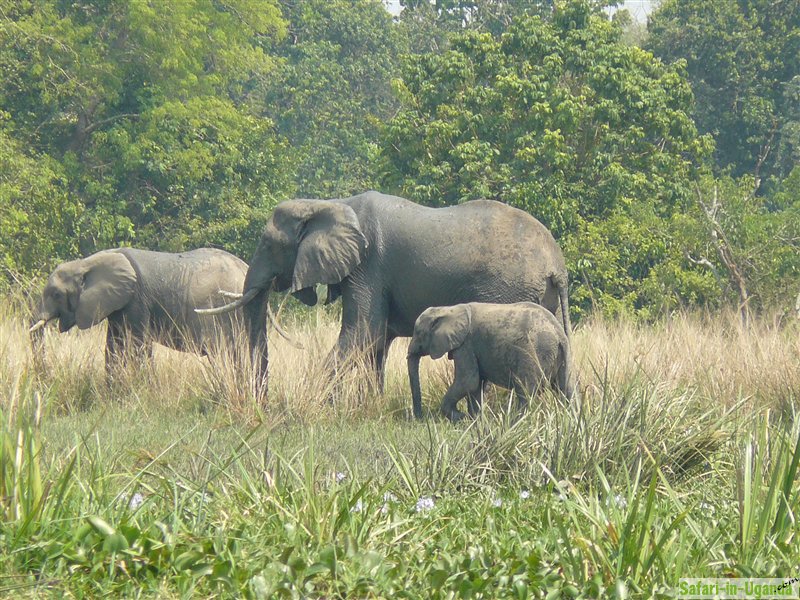 Once in Africa, every traveller must go on a safari into a national park. The untouched nature, the tranquillity and the unfamiliar (wild) animal world make such a safari in Africa an unforgettable experience. Uganda is of course particularly well known for its mountain gorillas. But ornithologists and butterfly lovers, too, find an extraordinarily great diversity of species in Uganda.
16 national parks leave little to be desired
For your safari in Africa, Uganda offers you with a total of 16 national parks (since September 2025) a very large selection. Almost all of these national parks lie in the western and therefore wetter half of Uganda. Yet each of them has its own special features. What all the parks have in common is that wonderful nature experiences await you here.
| Name | Size in km² | Distance from Kampala |
|---|---|---|
| Murchison Falls National Park | 3,877 | 230 |
| Queen Elizabeth National Park | 1,978 | 400 |
| Kidepo Valley National Park | 1,442 | 700 |
| Mount Elgon National Park | 1,145 | 250 |
| Rwenzori Mountains National Park | 996 | 390 |
| Kibale National Park | 766 | 350 |
| Toro-Semliki National Park * | 542 | 320 |
| Bwindi Impenetrable National Park | 331 | 450 |
| Kigezi National Park * | 265 | 400 |
| Lake Mburo National Park | 260 | 240 |
| Semliki National Park | 220 | 390 |
| Katonga National Park * | 207 | 280 |
| Kyambura National Park * | 156 | 380 |
| Bukaleba National Park * | 97 | 120 |
| Echuya National Park * | 34 | 470 |
| Mgahinga Gorilla National Park | 33.7 | 500 |
* Upgraded to national park status in September 2025 (previously a wildlife or forest reserve).
The three largest parks are also among the oldest: Murchison Falls and Queen Elizabeth were designated as early as 1952, and Kidepo Valley National Park followed in 1962. They owe their creation to the sleeping sickness transmitted by the tsetse fly. Its heavy incidence at the beginning of the 20th century led to large areas having to be evacuated for several decades. During this time the animal populations and nature were able to develop undisturbed. At the beginning of the 1950s the regions were then declared national parks.
The seven further national parks have been established for ecological reasons. They are located in areas that are of great importance for drinking water supply and quality.
Murchison Falls National Park
Murchison Falls National Park is the largest of all national parks in Uganda. On almost 3,900 km² await you here … Read more…
Queen Elizabeth National Park
Only half the size of Murchison Falls National Park, but scenically even more varied is Queen Elizabeth National Park … Read more…
Kidepo National Park
The third-largest national park in Uganda is Kidepo Park . It lies very remotely in the far north-east Read more…
Mount Elgon National Park
The heart of the 1,146 km² Mount Elgon National Park is its namesake: the 4,321-metre high … Read more…
Rwenzori Mountains National Park
The 996 km² Rwenzori Mountains National Park protects the central area of the mountain range of the same name on the border … Read more…
Kibale National Park
Kibale Park originated from a former forest reserve and received 1993 the status of a … Read more…
Bwindi Impenetrable National Park
Since 1991 there has been the 331 km² Bwindi Impenetrable National Park in the south-west of Uganda. At altitudes of … Read more…
Lake Mburo National Park
The highlight of this almost 260 km² national park is the Lake Mburo located within it, as well as its wealth of … Read more…
Semliki National Park
This national park differs scenically from the others in that it is located at an altitude of on average … Read more…
Mgahinga National Park
Mgahinga Gorilla National Park, with around 34 km² is the smallest and youngest national park in Uganda. It belongs to the protected area … Read more…
The six new national parks (since September 2025)
In September 2025 Uganda’s government declared six protected areas to be national parks. Uganda therefore has 16 national parks – the new parks are spread across the whole country and ideally complement the well-known destinations:
- Bukaleba National Park (Mayuge, Lake Victoria; around 97 km²): forest and lakeshore landscapes with more than 47 bird species – ideal for birdwatching, forest walks and boat tours.
- Echuya National Park (Kisoro/Rubanda; around 34 km²): bamboo and mountain forest on the Albertine Rift with rare bird species and encounters with Batwa culture.
- Katonga National Park (Kyenjojo/Kamwenge; around 207 km²): wetlands and papyrus on the Katonga River – canoe tours, sitatungas and more than 150 bird species.
- Kigezi National Park (Rukungiri; around 265 km²): savannah corridor to Queen Elizabeth National Park with elephants, buffaloes and cranes.
- Kyambura National Park (Rubirizi; around 156 km²): the famous Kyambura Gorge with its human-habituated chimpanzees.
- Toro-Semliki National Park (Ntoroko/Kabarole; around 542 km²): savannahs and forests between the Rwenzori Mountains and Lake Albert with Uganda kobs and elephants.
Note: The tourism infrastructure of the new parks is in some cases still being developed. Current information is available from the Uganda Wildlife Authority (UWA).