
Start › Land & People: Uganda Country Information › Uganda’s History and Politics: A Steep Rise › Modern Uganda – Times of Ascent
Modern Uganda – Times of Ascent
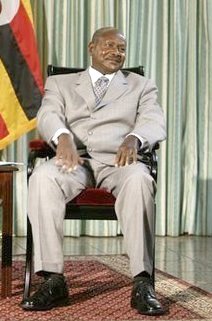 Museveni inherited a difficult legacy. But he handled his task very well from the very beginning. The key to his success was his policy of “national reconciliation”. The NRA was transformed into the party National Resistance Movement and the army was declared the state army.
He formed a government across all religions and ethnic groups and relied on local political participation on the ground. There was again law and order, the freedom of the press was expanded and Asians living in exile were allowed back into the country. Under Museveni, Uganda also regained international connections. Investment resumed and even tourism revived.
In 1993 the kingdoms Buganda, Toro and Bunyoro were permitted again, in 1995 a first Ugandan constitution was adopted, which limited the president’s terms of office to two electoral periods of five years each. In the spring of 1996 the first free presidential elections were finally held under international supervision, which Museveni was able to win with over 70 % of the vote. In the subsequent parliamentary elections mainly supporters of the NRM won.
Other parties than the NRM were not permitted. This was justified by the danger that parties could again endanger the unity of Ugandan society. However, it was open to anyone to become politically involved or to stand for parliament.
Economically, things were looking up again. Meeting all the criteria of the World Bank and the International Monetary Fund created confidence among investors and produced double-digit growth rates.
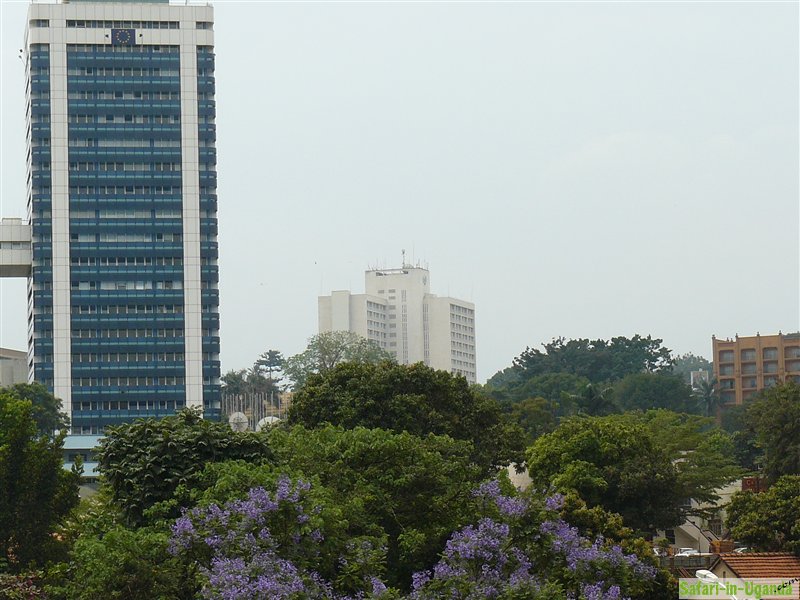 The next parliamentary and presidential elections took place in 2001 and confirmed Museveni in office, albeit with irregularities in the run-up and during the election itself. This was criticised both nationally and internationally.
Since Museveni’s second term of office should, according to the constitution, also have been his last, he sought an amendment to the constitution. At the same time, international pressure forced him into a referendum on permitting a multi-party system, for which in the summer of 2005 more than 90 % of Ugandans also decided. Since parliament approved a constitutional amendment, Museveni 2006 was able to run for election as president a third time and won with just under 60 % of the vote.
Democracy in 2010: Uganda in 42nd place
In the annual Transformation Report of the Bertelsmann Foundation, Uganda ranked 8th among all African states in 2008. Worldwide, Uganda ranks 42nd that year – with a rising trend. This shows that Uganda has been on the right path in recent years and decades.
Further links
- Website of the Bertelsmann Foundation on the Transformation Index
- “Uganda country report” in the 2010 Transformation Index (Online)
- “Uganda country report” as a download (Size: 189 kB; downloads so far: 3410; last download on: 03.09.2026)
- Report on the Uganda country report 2008 in “New Vision Online”
- Report by the Konrad Adenauer Foundation on the current situation of the parties in Uganda (as of 11/2008)
- Democracy Report of the Konrad Adenauer Foundation 2009 (Size: 168 kB; downloads so far: 2847; last download on: 02.05.2026)
- Further political writings of the Konrad Adenauer Foundation on “Uganda”