
Start › Land & People: Uganda Country Information › Uganda’s History and Politics: A Steep Rise › Uganda’s Path to Independence
Uganda’s Path to Independence
As only few Europeans found their way to British East Africa, the colonies were largely able to administer themselves. For this reason efforts towards independence began relatively late. It was not until 1952 that the first independence party (Uganda National Congress) was founded. The Bugandan King Mutesa II acted rather unhappily in his negotiations for independence. Not least for this reason, another treaty had to be signed with the British in 1955, which did not mean independence but merely granted the Bugandans more rights – which provoked the envy of other population groups.
Further party foundations date to 1956 (Democratic Party) and 1958 the Uganda People’s Union (UPU). The UPU was the first party without Bugandans in its leadership. In the first elections in the same year, several Africans made the leap into parliament for the first time. Out of the UPU and a splintered part of the Uganda National Congress the socialist-oriented party Uganda People’s Congress was finally founded, whose chairman was Milton Obote.
Because of the preference shown to the Bugandans by the British and the resulting inequalities in the country, the population was divided. Supremacy in the future independent Uganda was hard fought over. Religion also played a role, since both Protestants and Catholics strove for greater influence.
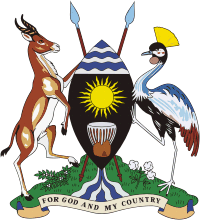 Despite all disputes and party wrangling, Uganda’s independence was nevertheless achieved in the form of a federation of the former kingdoms. With a coalition of the UPC and the Buganda party, with Milton Obote as the first Prime Minister, the colonial era officially ended on 9 October 1962.
Politically, however, Uganda remained very unstable. The former kingdom of Buganda enjoyed far-reaching sovereignty with King Mutesa II (a state within a state) and insisted on the wish for its own, entirely independent kingdom. Conflicts were therefore inevitable.